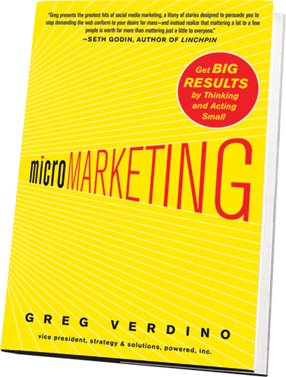
think small action plan

  1. 1. Most businesses can identify at least one microculture for which it can super-satisfy hyper-niche needs or interests with either products or brand-relevant content. What microcultures can your business serve?
  2. 2. Think about the content your organization already creates. Do you blog, tweet, or create videos, e-books, white papers, or other thought leadership? Do you offer interesting or helpful utilities that can be distributed on social platforms?
  3. 3. How much of your content is presented on your Website or in other macro formats? How could this content be microchunked so that it could be more easily linked to, syndicated, shared in the social stream, remixed, filtered, or tweaked?
  4. 4. If you had trouble answering the questions above, what other types of content could your company create (or source) to increase the pool of brand-relevant microcontent assets?
  5. 5. Has your company identified any consumer enthusiasts or evangelists who are already creating pro-brand content or conversations online or within social networks? Who are they, and what are they doing?
  6. 6. If so, have you ever engaged them directly? How? Did you offer them tools, content, recognition, support, etc., and what else might you do to engage them more effectively?
  7. 7. If not, how might you go about finding enthusiasts or evangelists? Where would you look, what would you be looking for, and what might you do to establish direct relationships?
  8. 8. How comfortable would your organization be to cede some control over message and distribution to consumers? In other words, how likely are you to treat individual customers as collaborators, colleagues, or coconspirators?
  9. 9. What are some of the things you could do to encourage and enable consumers to share brand-positive stories about your business or to band together as a community of like-minded supporters for your products or services?
  10. 10. Has your company identified the micromavens that are already satisfying (with their blog posts, tweets, videos, photos, etc.) the information needs of the microcultures you can serve? If so, list them here. If not, outline your thoughts on how you might go about finding at least a few.
  11. 11. Have you ever tapped relevant micromavens to act as ambassadors, evangelists, or salespeople who can directly reach the people you hope to influence or engage? How have you done this in the past? What are some ways you might begin now or improve upon what you’ve already done?
  12. 12. What can your organization offer—information, opportunities, access, products, services, etc.—to micromavens to make it worth their while to engage with you directly and share brand stories with their networks? In other words, how can you turn micromavens into enthusiasts?
  13. 13. Thinking about the audiences you already aggregate on your Website, at your events, through your media buys, or with traditional marketing, what are some of the ways you can celebrate and elevate microcontent creators who already are (or might, with the right inspiration, be interested in) creating content that supports your existing messaging or value proposition?
  14. 14. What types of Web presences could your company create that would curate the best microcontent already being created by others (real people’s blog posts, tweets, photos, videos, and more) and then filter, contextualize, and present it in a way that delivers value for your customers and prospects?
  15. 15. How likely is your existing content to be shared person-to-person in the stream, as part of the stream rather than as an interruption to its flow? How could you increase the likelihood that this happens?
  16. 16. What kinds of interesting content, utilities, or applications could your company create (other than traditional advertising) that could be seeded by you and would be shared, liked, linked, commented on, tweeted, or acted upon by consumers?
  17. 17. When creating content you hope will be shared in the stream, how might you accelerate pass-along by leaving room for consumers to add their own spin, reinterpret or remix your message, and view your content as inspiration to share something about themselves in addition to something about your brand?
  18. 18. What are some of the ethical ways you might motivate or incentivize sharing among your core customers, influencers, or tastemakers who act as programmers of their networks’ social streams?
  19. 19. In what ways could human-scale interactions put a human face on your organization and establish experts within your company as credible within the communities you serve today or hope to serve in the future?
  20. 20. How can your business lend its customers, prospects, or even consumers in general a helping hand through human-to-human microinteractions? In other words, what unique value do you bring to the table, and how can you share that value in meaningful ways with the communities and microculture you serve?
  21. 21. What are some of the ways in which you can kiss your customers on the cheek—surprise them, delight them, express your gratitude in a variety of small ways—in the course of managing the personal interactions between your organization and its public?
  22. 22. What are some of the best places to conduct these human-scale microinteractions? Be sure you think beyond Twitter and Facebook; consider how you might find, monitor, and participate in message boards, on forums, in online communities, in the blogosphere, on your own Web properties, in your own physical locations, or at real-world events.
  23. 23. How real time is your organization today? Does it take you moments to respond to consumer needs, issues, complaints, or opportunities—or does it take you days?
  24. 24. What are some of the things you can do to help your organization adopt a real-time–friendly structure, culture, or mindset? In doing so, how can you scale your ability to handle real-time one-on-one interactions so that they can be conducted in volume with a consistent standard for both response time and quality of engagement?
  25. 25. Who in your company is best suited to (and most capable of) conducting real-time interactions directly with consumers? What departments do they work in, what roles do they fill, and how many of them work within your organization today?
  26. 26. Where on the social Web do your customers congregate, and what opportunities do these sites, networks, or platforms offer for real-time interactions? How can representatives from your organization participate and add value?
  27. 27. Do you feel that you’ve ever missed out on a business or marketing opportunity because your organization wasn’t able to act quickly enough (e.g., to do business at the speed of now)? What are some of the obstacles you will need to tackle to ensure this doesn’t happen again next time around?
  28. 28. Thinking about your customer relationships today, would you characterize them as predominantly exchange-oriented or communal? In other words, do your “relationships” begin and end with the sale, or are you actively striving to establish, maintain, and grow something more meaningful and lasting?
  29. 29. What are some of the ways in which your organization can share control with its customers, establish and reinforce its trustworthiness, ensure mutual satisfaction between the company and its customers, and maximize the level of commitment each party feels to maintaining and promoting the relationship it has with the other?
  30. 30. How can you identify and engage key customers or prominent influencers (in other words, the right few) in communal relationships? What would you offer, and what would you expect in return?
  31. 31. What are some of the ways in which you would harness the marketing power of the right few by giving them the means and motivation to serve as ambassadors and evangelize your organization, products, or services to their personal networks and even a larger population of consumers? In other words, how can you empower your customers to create customers?
  32. 32. How will you measure the strength of your organization-to-public relationships and the effectiveness of these relationships in establishing credibility among a desirable audience, reaching a larger population, and driving consumers to action?
  33. 33. How effective do you feel your organization has been in earning the attention of your core constituents, particularly through social media?
  34. 34. What innovative approaches have you tried, and what are some of the uncommon paths you can follow in order to more effectively earn media and attention? Think about how microcontent, microinteractions, creativity, and unexpected ideas and executions can provide your organization with an advantage.
  35. 35. Where can your organization be present, seed content, or offer value in order to increase its likelihood of attracting attention among relevant audiences? What assets (content, utilities, tools, etc.) or resources (financial, human, or otherwise) will you need in order to be effective?
  36. 36. What types of impossible-to-ignore interactions can you inspire, and what can you do to increase the likelihood that consumers will become active participants and therefore attentive and highly engaged audiences?
  37. 37. What are some of the ways your organization can give attention—offer recognition to your customers, prospects, and enthusiasts, especially when they’ve chosen to become actively engaged in supporting your micromarketing efforts and evangelizing your company, products, or services to their friends, families, colleagues, and connections?
  38. 38. Now that you’ve begun to think through how you can apply micromarketing principles and approaches in your own business, let’s think a bit about achieving results. What are some of the business and marketing goals you can achieve by acting against the ideas you outlined above?
  39. 39. What are some of the ways the addition of micromarketing approaches to your overarching marketing and communications mix will allow your organization to achieve your goals more effectively or more efficiently, or even accomplish things you have been unable to do with more traditional approaches?
  40. 40. What will you look to as key performance indicators, and how will you measure your success against them?